

from August 9th, 2026
Summer study tour
A new program of studies at the source and origin of tea

This is a study tour. In every journey we organise — even a single day in the mountains — we try to share the knowledge gathered through years of living and working here, among landscapes and terroirs that continue to tell their stories through the leaves.
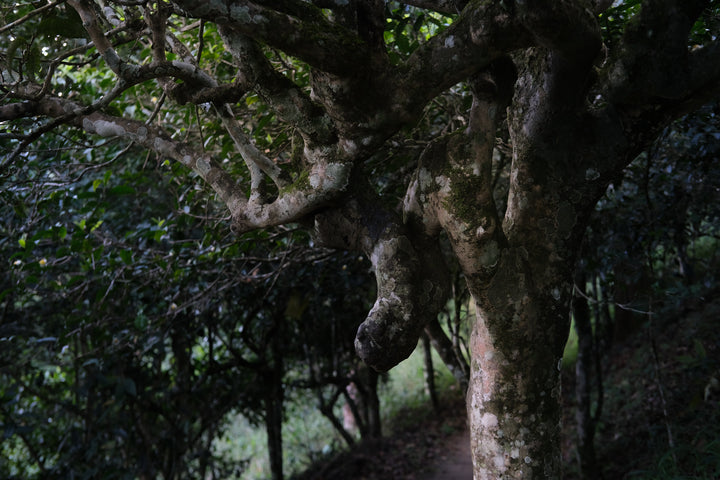
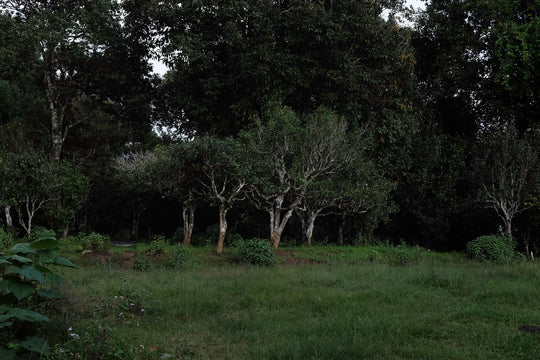
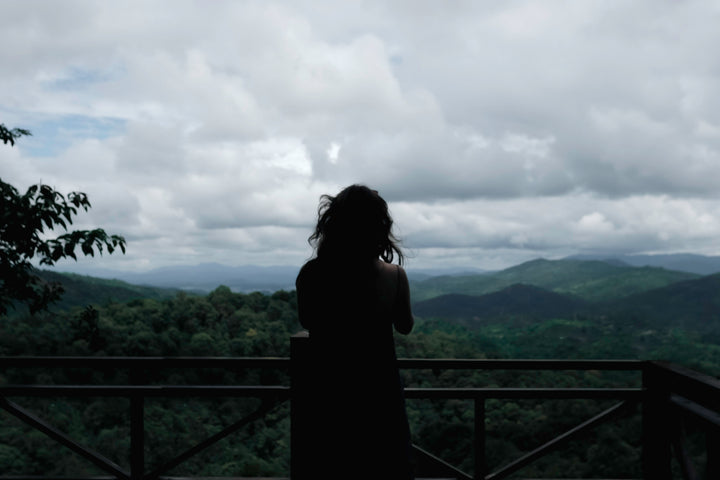
Our path unfolds in the southern reaches of Yunnan, in Xishuangbanna and the mountains that surround it, where the tea plant grows close to its botanical origin. Ancient forests, red soil, monsoon climate and high-altitude slopes shape leaves known for strength, bitterness and persistence.
During our courses we often say that every programme is the beginning of a conversation. That conversation continues through shared tastings, kilometres on mountain roads, exchanges of ideas, and the quiet time needed for observation and reflection.
This itinerary brings together two parts of our work: tea education and the living places of tea. Study sessions alternate with visits, tastings and walks in the mountains, allowing knowledge to grow through direct experience. Those who wish may also begin with an additional foundation module in our studio.
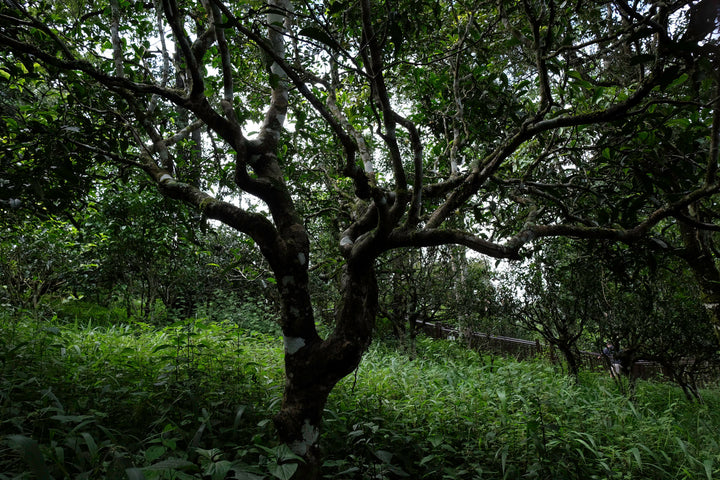
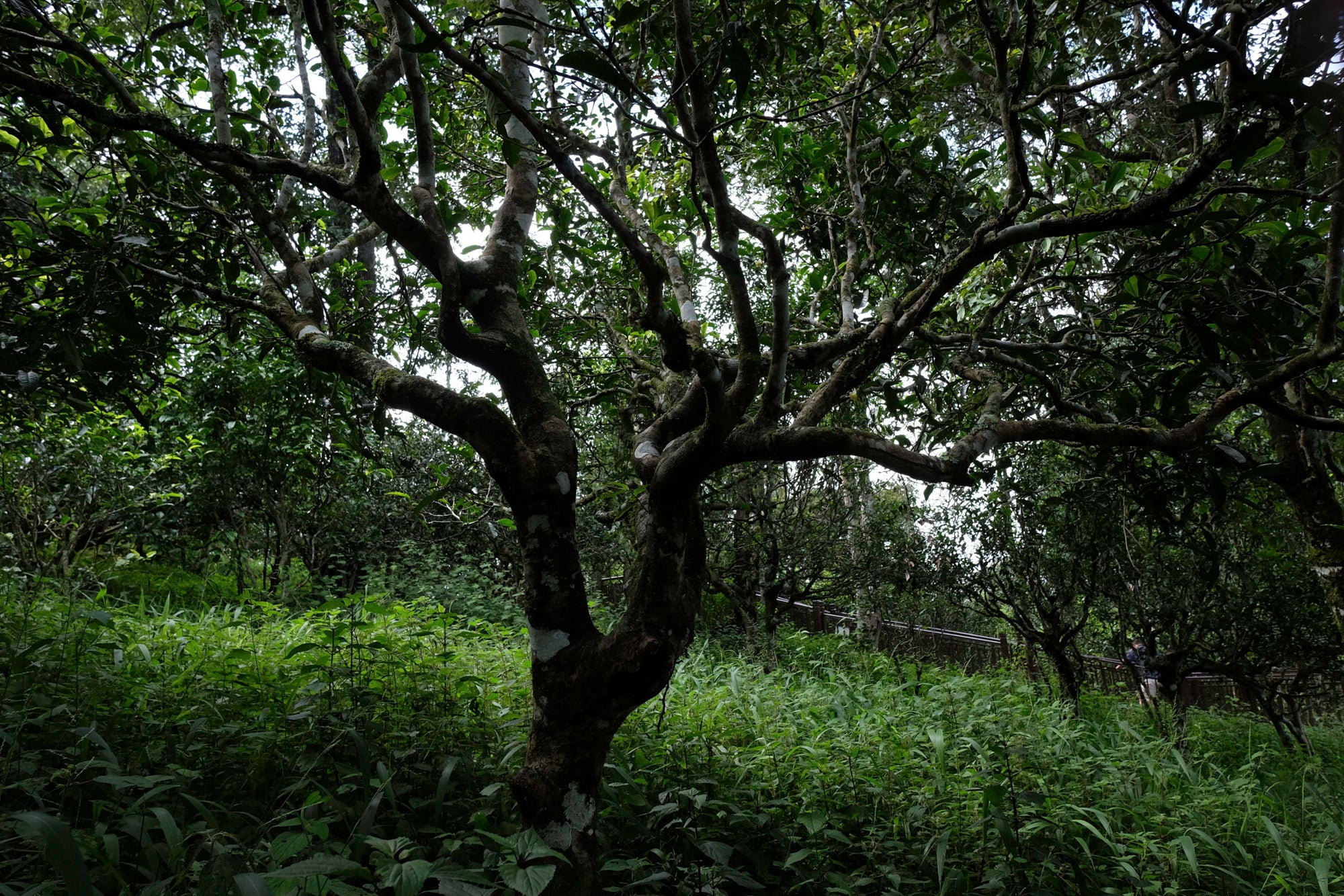
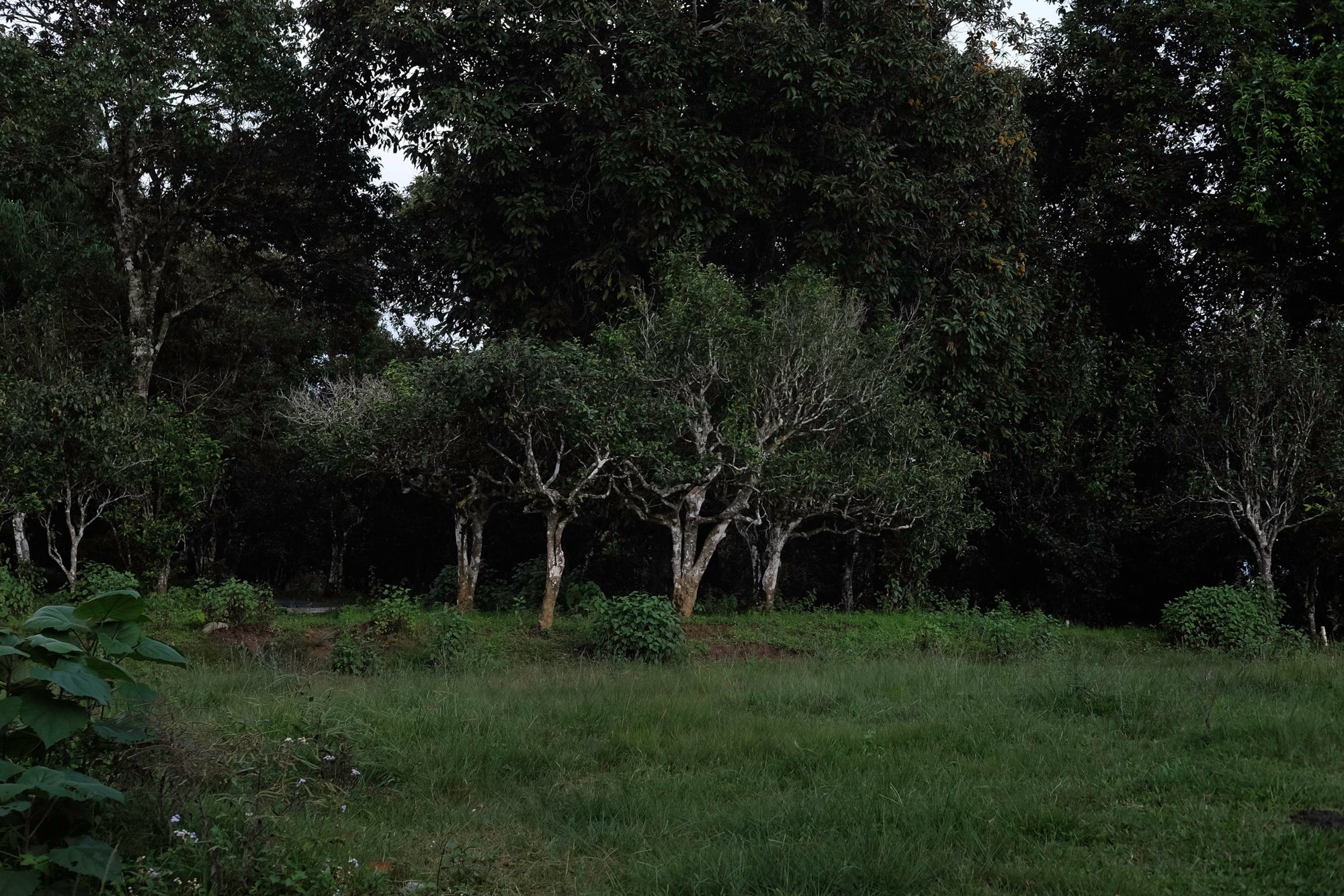
We establish a shared analytical language through Gongfucha practice and guided tastings, then enter the mountains — Nannuo and Bulang — walking among old trees and observing cultivars, canopy management and ecological conditions.
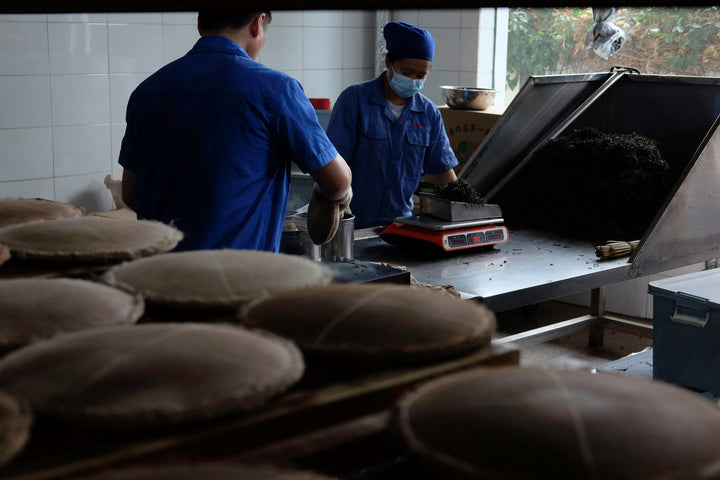
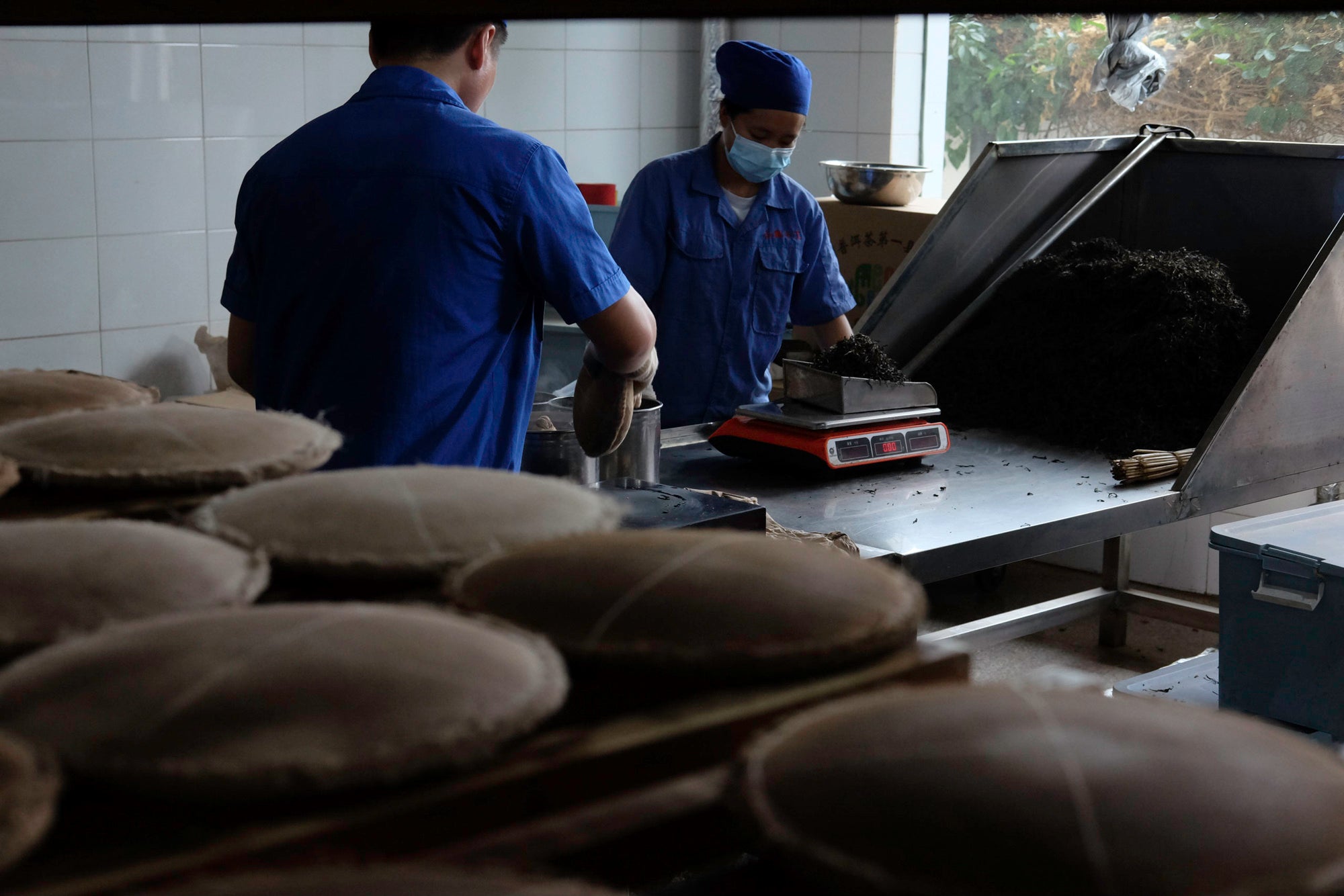
Back in the valley we explore another side of tea: factory production, blending logic and the evolution of the pu’er market. A session on shou pu’er examines wet piling and fermentation, while comparative tastings of white, red and wulong processing reveal how technique transforms the same plant.
Ceramics and incense accompany the study of the leaves, sharpening our attention to extraction, texture and aroma.
The journey concludes in Kunming, where producers, collectors and companies converge and where the path from forest to market becomes visible.
This programme is conceived as a shared process of study, where landscape, craft and tasting gradually form a coherent understanding of tea.
Places are intentionally limited. If you recognise yourself in this path, we invite you to contact us directly.
August 9–22, 2026 — Study journey in Yunnan: at the origin of tea
August 6–9, 2026 — Optional Xiaoye course foundation
Optional Extension
Xiaoye // Small-leaf course on Chinese tea
Xishuangbanna, August 6th–9th
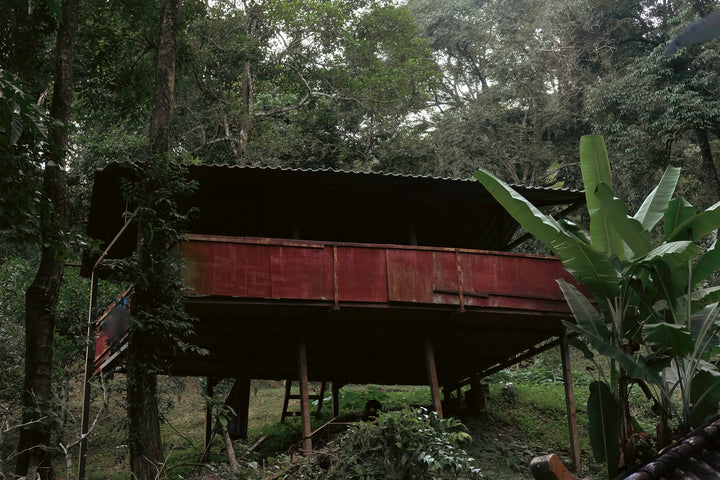
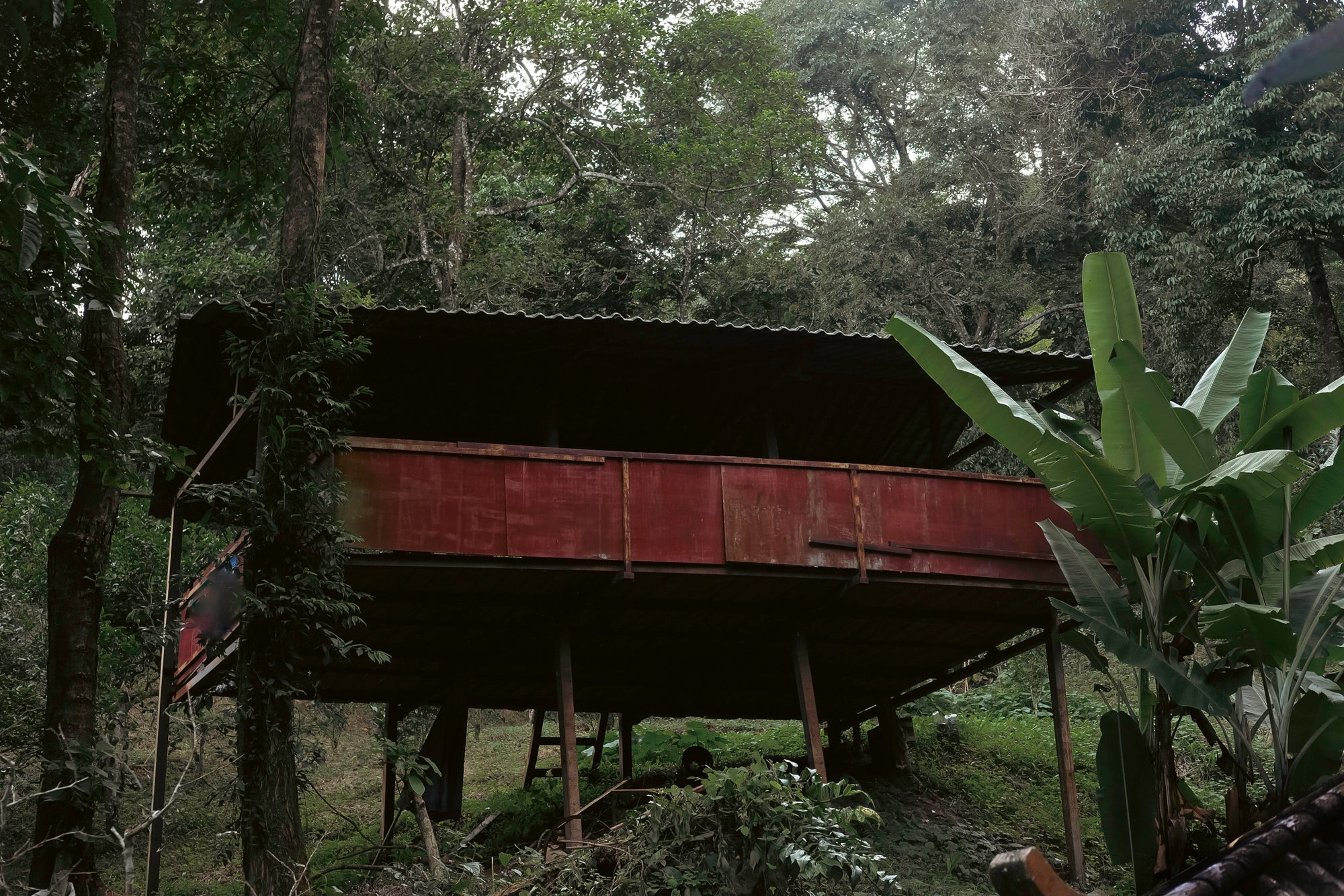
For participants who wish to continue their studies, we offer an additional three-day theoretical module dedicated to the final sections of our Xiaoye Course.
These sessions cover topics not fully addressed during the field programme: the broader history of tea across China, regional geography and its influence on production styles, and the technical foundations of green, white, red, and wulong teas beyond the pu’er focus of the previous days.
Held in our studio in Xishuangbanna — where we regularly conduct structured teaching — this extension provides a more classroom-based environment, allowing time for systematic study, guided tastings, and open discussion. The aim is to consolidate knowledge within a wider framework, connecting Yunnan’s reality to the larger map of Chinese tea culture.
Accommodation and studio access are included for those who choose to remain.
Our travel is designed by us, and it is independent by any travel agency: we bring you with us on Eastern Leaves routes, guided by a farmer and tea scholar, through places, tastes and people that are most menaningful for us.
From our travelers
I still can't believe I was in all these amazing places
"I’m drinking a rock tea from Wuyishan at home, a month after our trip. Brewed in a beautiful Yixing pot I bought there, with tea from the mountain I hiked. I still can’t believe I was in those amazing places... I reminisce about this holiday a lot. It was perfect. People were incredibly kind. We had wonderful encounters with many lovely tea people, and our group was the best. Tea people are so warm. We saw incredible sights, drank the finest teas, and had so much fun together.
Everything that was abstract before became real while traveling. It’s hard to put my feelings into words, but a month later, I haven’t gone a day without thinking about the trip. I wasn’t homesick then, but now I’m definitely tripsick. All of this happened under the caring, enthusiastic guidance of Vivian and Lorenzo, truly two of the kindest, warmest, and most knowledgeable people I know."
W.E., from The Netherlands
We have become more sensitive and have touched beauty
"A journey that left me breathless, an experience that allowed me to immerse myself in a completely different reality, to discover new horizons and to deepen my knowledge.
Yunnan, a land of magic and mystery, welcomed me with its enchanted landscapes and its rich and profound culture. I was in close contact with the traditions and stories of this unique place, and I emerged transformed.
This trip has been one of the most beautiful of my life, an experience that gave me unforgettable moments and made me discover a new part of myself. And it's only the beginning, because I know this is just the starting point for a new longer and adventurous journey with Vivian, Lorenzo, and all the friends at Eastern Leaves.
Thank you for giving me this unique and unforgettable experience."
L.R., from Italy
None of what I have experienced, would have been accessible and possible as independent traveller
Thank you so much for two unforgettable weeks around Yunnan.
As an event organizer I don’t trust other people easily, but your tour was seamless and you gave us so much more than you promised. You’re both very alert to the necessities of the group, flexible and caring that you made us feel special from day one. You also have a keen eye for detail, which always makes a big difference.
Every day we could discover a new shade of the fascinating tea world of Yunnan and it really was a deep dive into the subject at 360 degrees. Most of all, 98% of what we experienced, tasted, brewed, learnt and enjoyed wouldn’t have been accessible and possible as independent traveller. You really are a passport for the world of Chinese tea and I can’t wait to discover another tea area of your country with you.
L.A., from Venice
Our travel package includes accommodation in selected, cosy hotels, all the internal transportation, and meals. It doesn't include the flight from/to your country of origin, visas (but we support your application), and insurance.
Once you decide to travel with us, we assist you in everything we can, following our experience with travellers from all over the world.
Contact us
Further travel options


White tea tour, October
October 19th – November 3rd, 2026
We curated a journey through the landscapes, crafts, and teas that best express our passion for white tea.
Starting in Fujian, we explore the historical heartland of white tea, visiting the production centres of Fuding and Zhenghe where harvests are divided with remarkable precision by season, day, and even hour. Along the way, we discover the great porcelain traditions of Dehua and Jingdezhen, where kaolin-rich clays are shaped and fired into the luminous ceramics long associated with the tea table. Our base in Quanzhou, a historic maritime crossroads, offers a glimpse into the cultural exchanges that shaped this region.
The second half of the journey brings us west to Yunnan, at the botanical origin of the tea plant. In the forests of Xishuangbanna and on Nannuo Mountain, we taste local cultivars and produce our own autumn white tea, later evaluating it through comparative tastings.
This journey reflects the spirit of Eastern Leaves—tea, craft, landscapes, and the people who bring them to life.


Tea Horse Road Tour
November 22nd – December 5th, 2026
We built this journey along the Chama Gudao 茶马古道, the ancient Tea Horse Road that for centuries carried pressed tea from Sichuan and Yunnan into Tibet. Starting in Chengdu, we explore Sichuan's teahouse culture before reaching Mengding Mountain, traditionally regarded as the birthplace of cultivated tea, and Yingjing, home to the Tea Horse Road Museum and to zangcha, the dark tea once pressed specifically for the Tibetan trade.
From Kunming we continue to Dali and the ancient town of Shaxi, one of the best-preserved staging posts on the old route. The second half of the journey brings us home to Xishuangbanna, at the botanical origin of the tea plant, where we visit our own forest on Nannuo Mountain, press tea by hand with the farmers of Menghai, and end in Yiwu—historically the starting point of the Tea Horse Road itself—walking a stretch of the original stone path before a final tasting together. This journey reflects the spirit of Eastern Leaves—tea, craft, landscapes, and the people who bring them to life.


Winter Tour
December 23rd, 2026 – January 5th, 2027
This new itinerary explores the diversity of our beloved Yunnan in tea, geography, and culture: we cross its high-mountain geography from north to south, through its two most important kingdoms of Nanzhao (Tang dynasty, 618-907) and Dai (Song dynasty, 960-1279), indulging in the best leaves that the locals who inhabited these lands refined over centuries.
It is a tour of study, with the workshop we prepare for you on brewing, ancient incense, and Tang dynasty cakes; of exploration, with mountains, forests and new encounters; of awe, thanks to the breathtaking landscapes of Yunnan; of people, we will brew together with the producers their best teas, and we will be hosted by pottery masters and tea professionals, freely interacting with their humanity and work.
This journey will take you through everything that makes Eastern Leaves: our Yunnan, a deeper understanding of Chinese culture, and all of the people that make our tea journey meaningful.
Custom Tea Journey
Tailored to your preferences and passions. From wilder explorations to focused courses and masterclasses, each tour is designed with the same depth and immersion in our tea world.

Travel's FAQ
We choose every place we stay in with care — not only for comfort, but for how it fits the land around it.
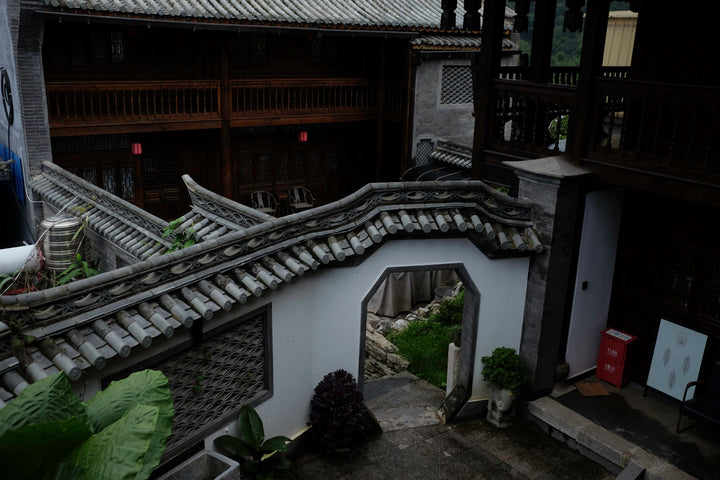
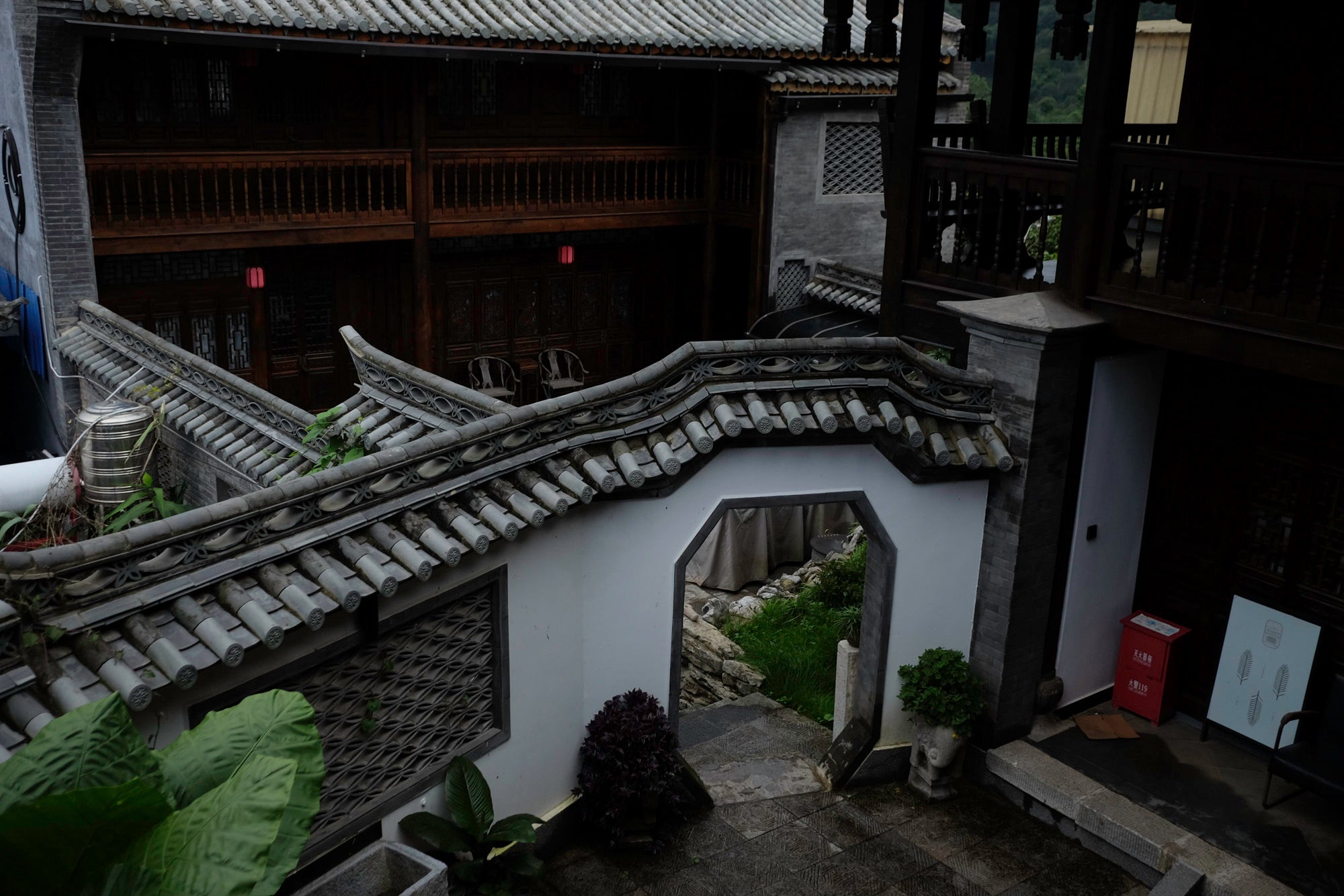
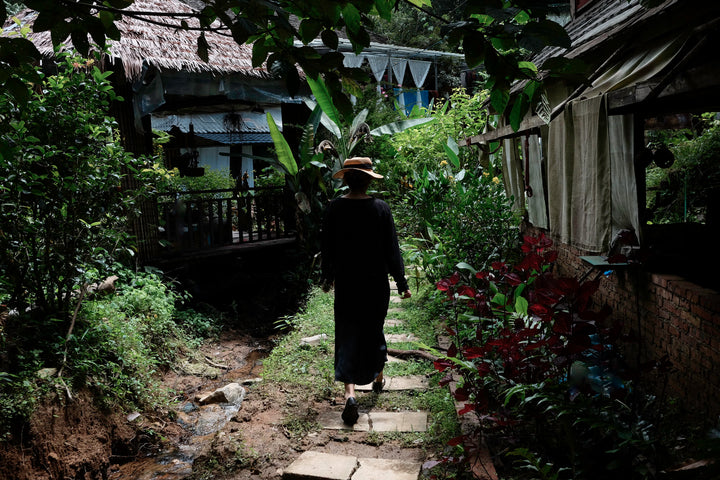
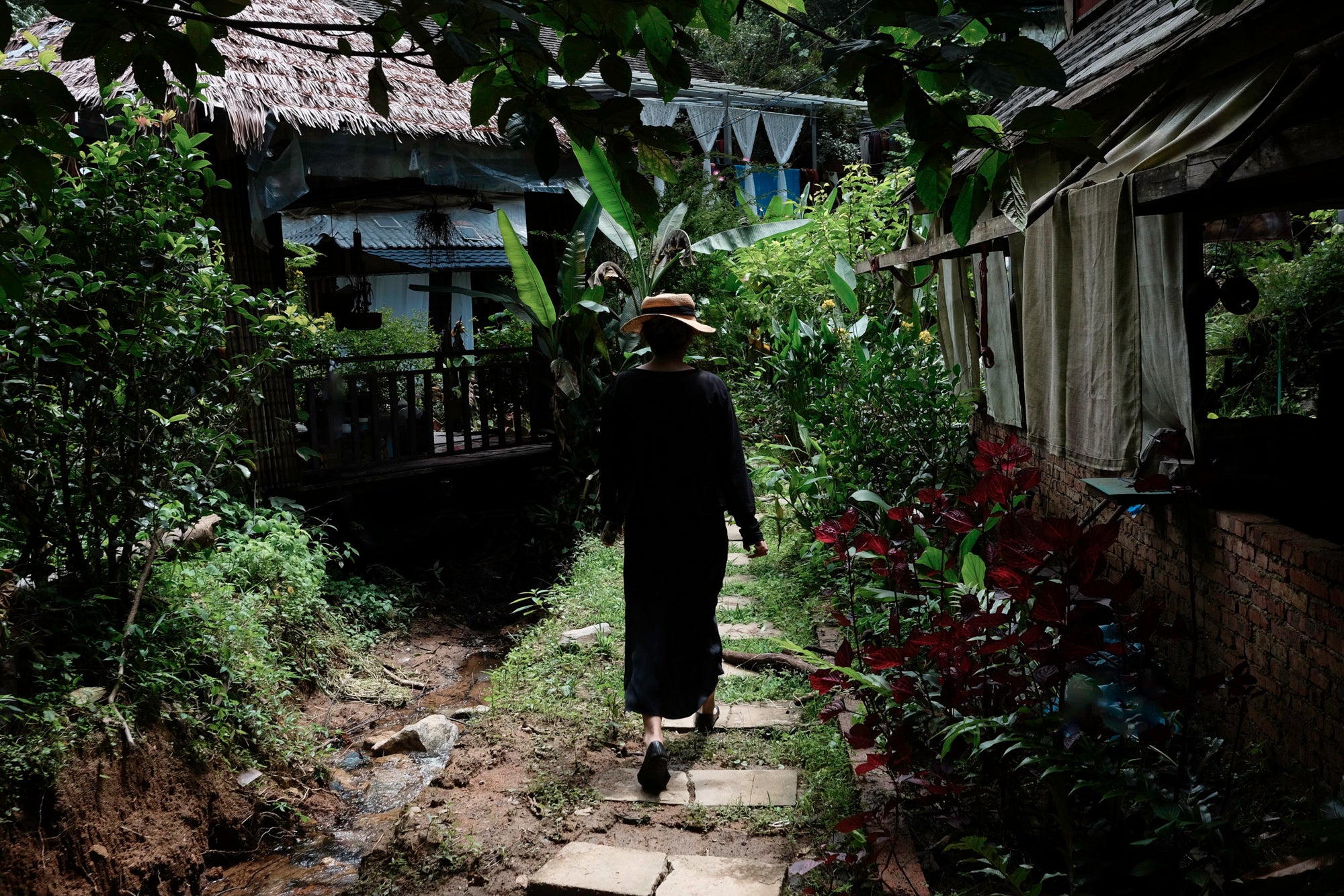
In Xishuangbanna, guests stay in a private villa next to our tea studio, close to the forest and a short walk from where we work. Along the rest of the route — Kunming, Dali, Shaxi — we stay in hotels we've come to trust over years of guiding, chosen for their service, their setting, and a sense of place that a bigger chain could never offer. Most have their own tea room, which tends to become a natural gathering point at the end of the day.
You can see our full list of partner accommodations in the document below.
For over 50 countries China releases a visa-free stay (the list is at this link).
The list has expanded considerably in recent years — it now includes the United Kingdom and Canada — and is confirmed through the end of 2026. You can check whether your country is included at this link.
If your country is not on the list, China issues 30-day tourist visas through a fairly straightforward process. We suggest contacting your local Chinese visa centre for the current requirements and to complete the application. The standard procedure takes around five working days, with an urgent 48-hour option also available; in most countries, agencies can assist with the paperwork and bookings.
Feel free to contact us for any further support.
Sure! Food is an important part of our experience (and of our lives), so we plan it carefully.
Chinese cuisine is extremely diverse: it includes countless varieties of tofu and a variety of vegetable cooking techniques; we will encounter tuberoses and radishes, wild herbs and flowers: a plant-based diet, in addition to a onnivore diet, is entirely possible.
We also have experience with various dietary restrictions, such as gluten-free, lactose intolerant, and religious restrictions; when you contact us, please let us know your needs and preferences, and we will gladly plan your meal accordingly.
As you are probably aware, we are huge fans of photography, particularly when done slowly and with passion: if you, too, enjoy cameras and pictures, it would be wonderful to share our enthusiasm along the way.
Photos and videos are permitted as long as they do not disrupt the flow of travel for our farmers and experts, ensuring a pleasant experience for all of our guests.
If you want a tour specifically designed for documentary purposes, complete with filming mics and equipment, please contact us in advance to plan a customised trip.
When you decide to book we advise to keep in touch with us, we will assist you as much as possible with flights from your country of origin, visas, and any preparation you may need.
Visas for China have recently become easier to obtain for the majority of nationalities; for the most up-to-date visa rules, we recommend checking the official Chinese website and your local Chinese Embassy or Consulate.
Yes, if you wish, we can provide you with a digital or printed certificate for your travel experience into tea.
For travellers, China is one of the safest countries in the world, with extremely low crime rates, including pickpocketing.
Our commitment along the route is to keep you as safe as possible, both physically and mentally.
For our longer tours, we usually offer the option to join only a portion of the tour, for at least 12 days, based on availability.
If this is your wish, please contact us so that we can plan your trip together.
I cookie vanno bene?
Utilizziamo i cookie per migliorare la tua esperienza di navigazione
Scopri di più