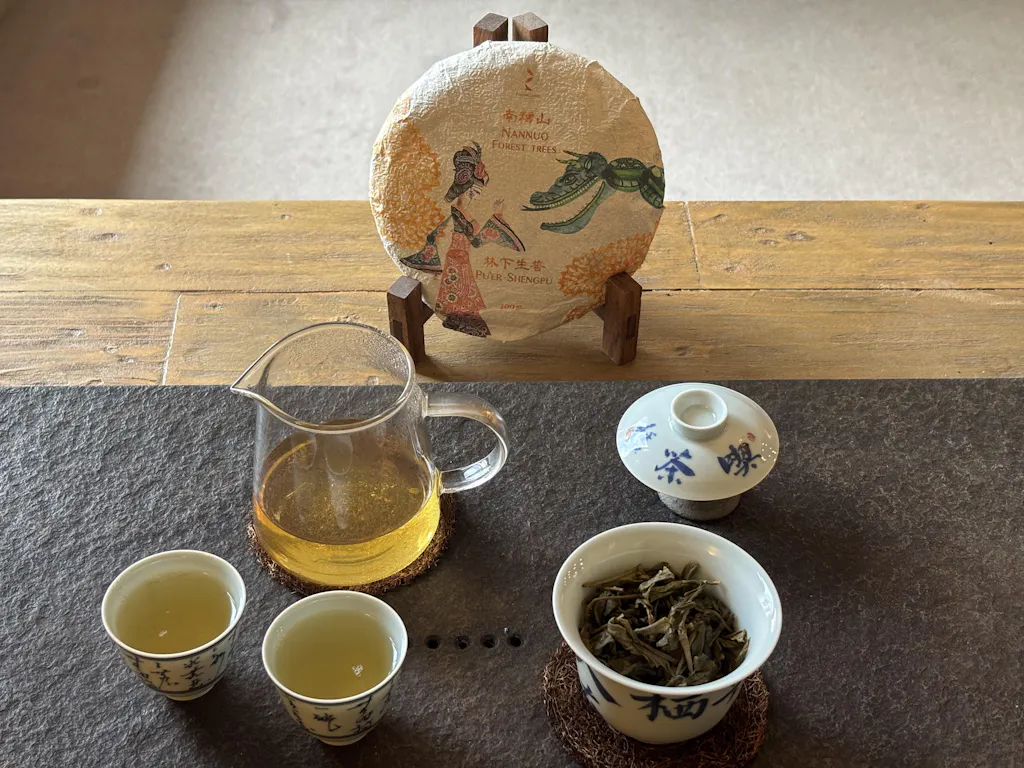
Dry hot leaves carry a typical sheng profile, but there’s something already softened in it, like it’s not entirely fresh. There’s a creamy undertone that makes everything gentler, along with a sense of quiet age, even though it’s a 2025.
After rinsing, the leaves give off a smell of cigarette pack dryness, baked warmth from sun heat, and a layer of apricot puree underneath. Don’t forget to smell the lid. It hides a freshly cut maracuja note that can persuade even those who are not fond of sheng.
The first brew comes with an apricot jam taste and a pleasant, juicy astringency. It’s balanced, not too sharp, and easy to approach.
In the second infusion, the tea gains strength and body. More baked notes appear, along with a bit more astringency. At the same time, the body becomes fuller, smooth, almost velvety, with a rounded texture that holds well in the mouth.
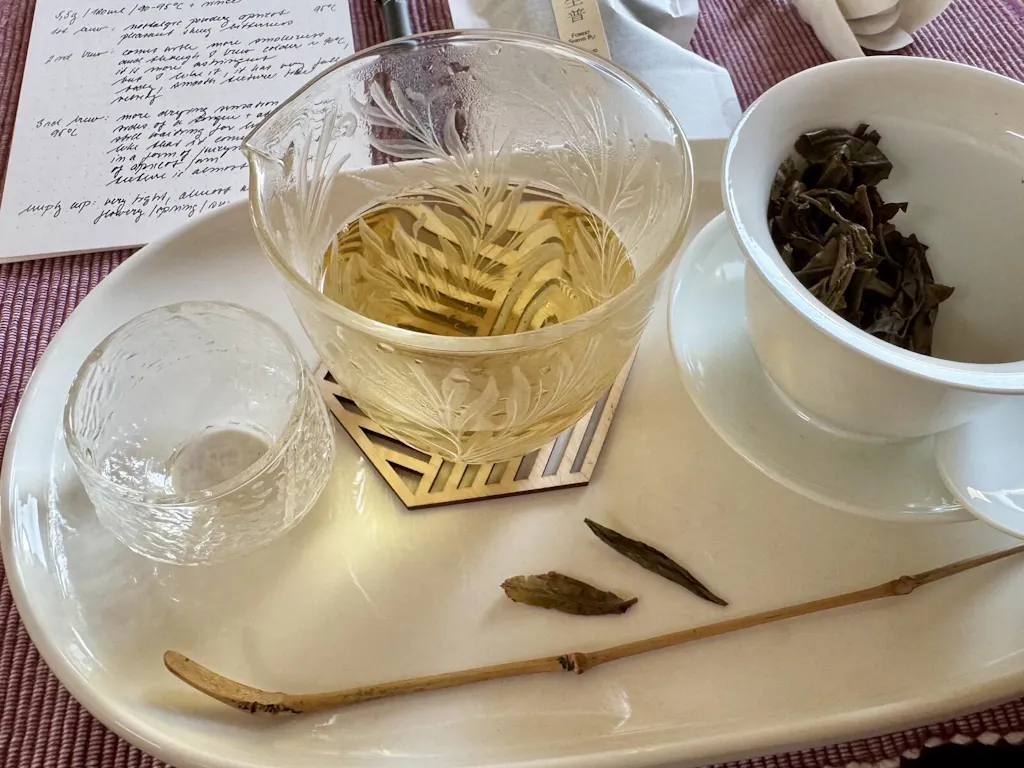
The third brew shifts again. There’s a noticeable drying sensation on the sides of the tongue and the upper palate. The huigan doesn’t come immediately. It takes around two minutes, but when it does, it returns as a soft juiciness, again with hints of apricot jam. The texture here is quite dense, almost jelly-like.
The empty cup aroma is very high and subtle, almost disappearing, with a light floral note that leans toward a spring/summer character.
Overall, the tea moves between softness and structure, with a slightly aged feeling and a distinct apricot line running through it. It can carry you for a couple of hours, holding its strength across many full-bodied infusions.