

new: From November 22nd, 2026
China Tea Horse Road Tour
Chengdu - Ya'an - Mengding mtn. - Yingjing - Kunming - Dali - Shaxi - Xishuangbanna - Nannuo mtn. - Menghai - Yiwu mtn.

An old road once carried tea on the backs of men and horses, from the misted temples of Sichuan to the high forests of Yunnan — we follow it in reverse, tasting our way from its birthplace to its edge.
This itinerary was built along the Chama Gudao 茶马古道 — the Tea Horse Road — the ancient trade route that for over a thousand years moved pressed tea from Sichuan and Yunnan into Tibet, and horses, wool and salt back the other way. It is a journey of origins and endings: we begin where cultivated tea is said to have first been planted, and finish among the wild ancient forests where it still grows free.
We start in Chengdu, Sichuan's capital of teahouses and everyday tea ritual, before travelling to Ya'an and Mengding Mountain — the birthplace of cultivated tea, where imperial gardens once supplied tribute tea to the court. From there we follow the old road itself to Yingjing, home to the Tea Horse Road Museum and to Zangcha (Tibetan tea), the dark tea pressed and aged specifically for the Tibetan trade — we taste it alongside the black clay and kilns the region is equally known for.
We continue to Kunming, then west to Dali and the ancient town of Shaxi, one of the best-preserved staging posts on the old trade route, still carrying the rhythm of caravans in its stone streets. From there we return home, to Xishuangbanna and Nannuo Mountain, at the very origin of the tea plant, where we visit our own forest, taste and press pu'er with the farmers of Menghai.
We end the journey in the wide valleys of Yiwu — the mountain most historians point to as the true starting point of the Tea Horse Road — walking a stretch of the original stone path through the forest, before a final tasting together.
November 22nd – December 5th, 2026
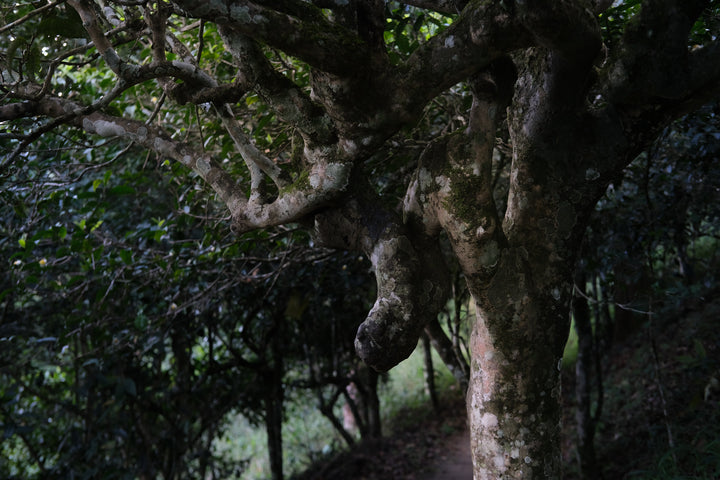


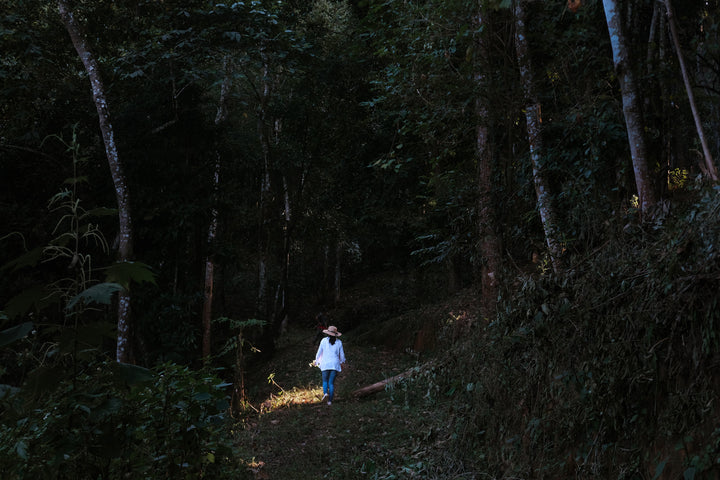
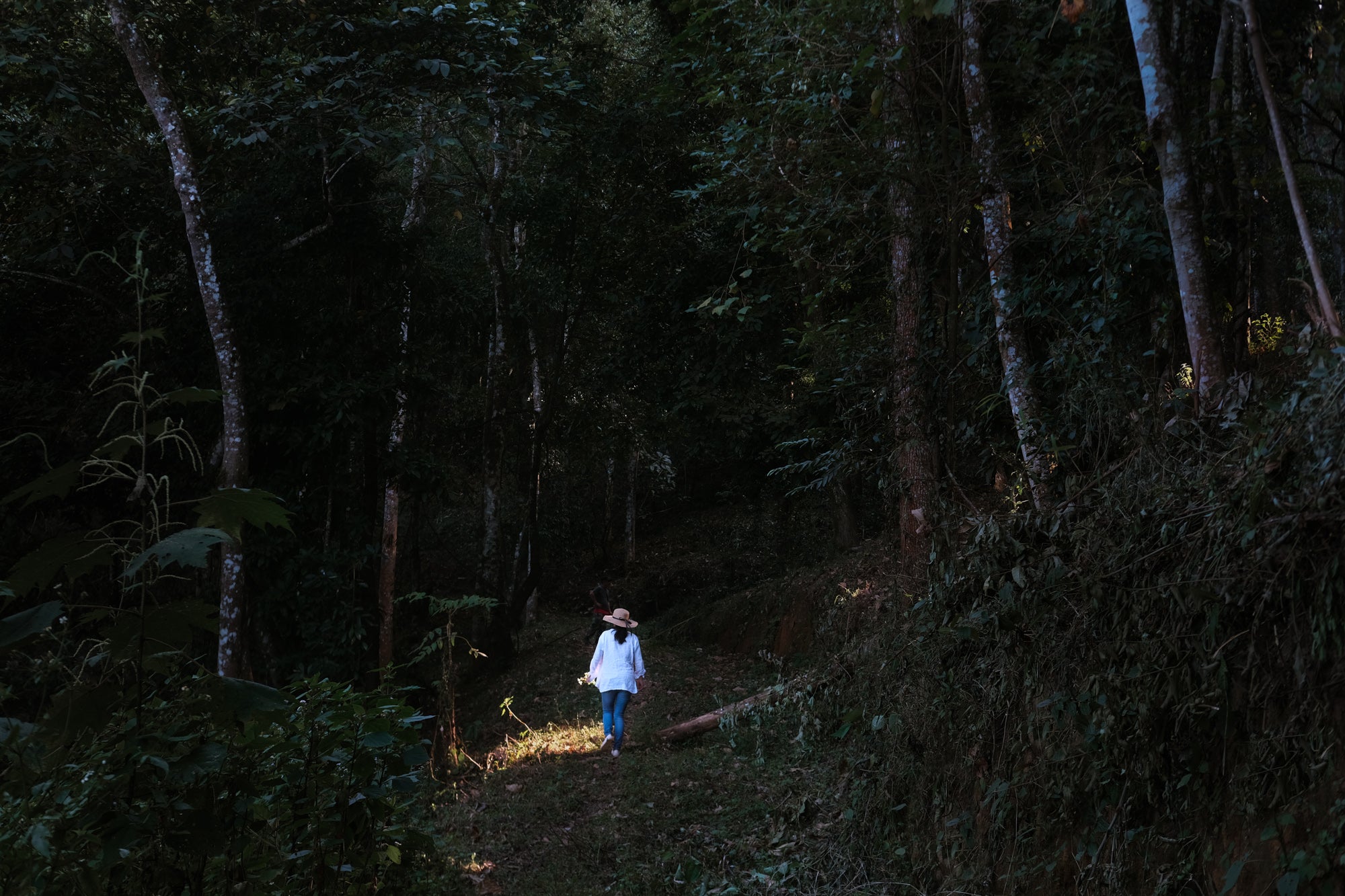


A preview of your journey


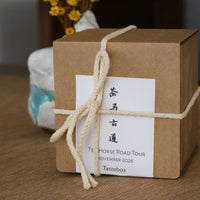
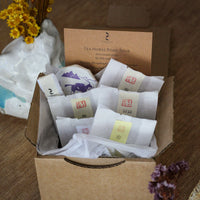
Cofanetto: Tea Horse Road Tour, Novembre 2026
Questo confezione d'assaggio è un’anteprima della gamma di fragranze che potrete scoprire durante il nostro tour lungo la Via del Tè e dei Cavalli, nel novembre 2026.
Viaggeremo attraverso il Sichuan e lo Yunnan ripercorrendo la leggendaria rete di percorsi che collegava le terre del tè di Yiwu con destinazioni lontane oltre i confini cinesi, come il Tibet. Milioni di persone hanno calpestato le pietre che ancora oggi si trovano nelle foreste e sulle montagne scoscese, e noi seguiremo le loro orme mentre assaggiamo i tè di queste terre.
Questo “Viaggio in una scatola”:
- Sichuan, Mengdingshan: Mengding Huangya, un tè giallo composto esclusivamente dai germogli più pregiati e giovani, provenienti dai giardini del tè che un tempo erano i giardini imperiali.
- Sichuan, Mengdingshan: Tè rosso all’osmanto, un tè profumato ottenuto dai minuscoli fiori di osmanto, ricchi di un intenso aroma fruttato tradizionalmente definito “fragranza celeste” (天香 tiānxiāng).
- Sichuan, Ya'an: tè nero tibetano del 2020, un tè fermentato pressato e conservato in mattoncini di bambù, prodotto nel Sichuan per essere esportato e consumato in Tibet.
- Yunnan, monte Yiwu, villaggio di Liehushan: Shengpu 2023, un giovane tè Pu'er che un tempo era il tè offerto in tributo all'imperatore, proveniente dal punto di partenza dell'antica Via del Tè e dei Cavalli
- Yunnan, monte Yiwu, villaggio di Mahei: Shupu 2024, un tè Pu'er fermentato proveniente da questa terra di grande valore storico.
- Yunnan, monte Nannuo: Shupu del 2018 pressato in mini-tortine avvolte in carta di riso e decorate con il cavallo, simbolo della strada leggendaria.
- Yunnan, valle di Menghai: incenso all’osmanto, un incenso naturale che esprime la purezza dei suoi ingredienti, legno di agar e fiori di osmanto.
Sei tè e un incenso per presentarvi l’esperienza del nostro “Tea House Road Tour” di novembre 2026. Godetevi questa gustosa anteprima di paesaggi, persone, foglie, arte e sapori.
Formato: confezione degustazione con 6 campioni di tè da 10 g ciascuno e un campione di incenso.
Per ulteriori dettagli sull'itinerario di questo tour e per vedere la galleria fotografica, visita la pagina Tea Horse Road Tour
Dai un'occhiata anche agli altri nostri tour per il 2026: Summer Study Tour , White Tea Tour and Winter Yunnan Tour.
Questa confezione degustazione è un'edizione limitata, disponibile fino al 23 dicembre o fino a esaurimento scorte.
Our travel is designed by us, and it is independent from any travel agency: we bring you with us on Eastern Leaves routes, guided by a farmer and tea scholar, through places, tastes and people that are most meaningful for us.
From our travelers
I still can't believe I was in all these amazing places
"I am drinking a rock tea from Wuyishan at home, a month after our trip. Brewed in a beautiful Yixing pot that I bought in actual Yixing, and tea from the mountain that I hiked on. I still can't believe I was in all these amazing places... I am reminiscing about this holiday a lot. It was just perfect. People were incredibly nice. We had wonderful encounters with lots of lovely different tea people and the people in our group where the best. Tea people are so nice. We saw incredible things, drank the best teas and had so much fun together. Everything that was abstract for me beforehand, became concrete while traveling. It's hard to capture my feelings in words, but but I am back home for a month now and there was not a single day that I didn't think about the trip. I wasn't homesick while traveling, but I am tripsick now.
And all of this took place under the caring and enthusiastic guidance of Vivian and Lorenzo, truly two of the most kind, warm-hearted and knowledgeable people that I know."
W.E., from The Netherlands
We have become more sensitive and have touched beauty
"I want to consider a different approach. I don't want to make a review of what went well and what didn't go well. I don't want to dwell on individual stages and describe a fantastic world. I reject any image of travel, tea, an extraordinary country and all that. I want to forget any kind of knowledge I have. Tea lovers already know all about these things. I want to tell them that they don't need "yesterday" because it is the necessary condition to savor any moment with its different temperatures, colors and fragrances. Isn't this what happens when you drink forgotten tea? Isn't it like drinking a new tea, after all? When we abandoned the concept of tea bags, what did we do? We entered an ancient forest for the first time. We put our hands in the clay. We tasted food with a sparkling and surprising flavour. We have become more sensitive and have touched beauty. And this is where the world of Eastern Leaves becomes real"
D.N., from Italy
These experiences last only a few weeks, but the memories will stay with me for a lifetime
I've joined two tours with Eastern Leaves, and both exceeded my expectations. Though I’m not usually a fan of group travel, being with fellow tea lovers made it special.
The Eastern Leaves team stands out for their thoughtfulness, sincerity, and commitment to sharing knowledge. They were supportive before the trip and attentive throughout, providing quality accommodations and meals while regularly asking for feedback.
The itineraries strike a great balance between active days and restful ones with tastings and workshops, and they remain flexible to adapt to changes.
I visited renowned places like Wuyishan, Yixing, and Yunnan’s wild tealands, and even returning to places like Nannuo and Menghai brought new perspectives. These short journeys have left me with lasting memories.
E.T., from The Netherlands
None of what I have experienced, would have been accessible and possible as independent traveller
Thank you so much for such two unforgettable weeks around Yunnan.
As an event organizer I don’t trust other people easily, but your tour was seamless and you gave us so much more than you promised. You’re both very alert to the necessities of the group, flexible and caring that you made us feel special from day one. You also have a keen eye for detail, which always makes a big difference.
Every day we could discover a new shade of the fascinating tea world of Yunnan and it really was a deep dive into the subject at 360 degrees. Most of all, 98% of what we experienced, tasted, brewed, learnt and enjoyed wouldn’t have been accessible and possible as independent traveller. You really are a passport for the world of Chinese tea and I can’t wait to discover another tea area of your country with you.
L.A., from Venice
Our travel package includes accommodation in selected, cosy hotels, all the internal transportation, and meals. It doesn't include the flight from/to your country of origin, visas (but we support your application), and insurance.
Once you decide to travel with us, we assist you in everything we can, following our experience with travellers from all over the world.
Contact us
Further travel options


White Tea Tour
October 19th – November 3rd, 2026
We curated a journey through the landscapes, crafts, and teas that best express our passion for white tea.
Starting in Fujian, we explore the historical heartland of white tea, visiting the production centres of Fuding and Zhenghe where harvests are divided with remarkable precision by season, day, and even hour. Along the way, we discover the great porcelain traditions of Dehua and Jingdezhen, where kaolin-rich clays are shaped and fired into the luminous ceramics long associated with the tea table. Our base in Quanzhou, a historic maritime crossroads, offers a glimpse into the cultural exchanges that shaped this region.
The second half of the journey brings us west to Yunnan, at the botanical origin of the tea plant. In the forests of Xishuangbanna and on Nannuo Mountain, we taste local cultivars and produce our own autumn white tea, later evaluating it through comparative tastings.
This journey reflects the spirit of Eastern Leaves—tea, craft, landscapes, and the people who bring them to life.


Winter Tea Tour
December 23rd, 2026 – January 5th, 2027
This new itinerary explores the diversity of our beloved Yunnan in tea, geography, and culture: we cross its high-mountain geography from north to south, through its two most important kingdoms of Nanzhao (Tang dynasty, 618-907) and Dai (Song dynasty, 960-1279), indulging in the best leaves that the locals who inhabited these lands refined over centuries.
It is a tour of study, with the workshop we prepare for you on brewing, ancient incense, and Tang dynasty cakes; of exploration, with mountains, forests and new encounters; of awe, thanks to the breathtaking landscapes of Yunnan; of people, we will brew together with the producers their best teas, and we will be hosted by pottery masters and tea professionals, freely interacting with their humanity and work.
This journey will take you through everything that makes Eastern Leaves: our Yunnan, a deeper understanding of Chinese culture, and all of the people that make our tea journey meaningful.
Custom Tea Journey
Tailored to your preferences and passions. From wilder explorations to focused courses and masterclasses, each tour is designed with the same depth and immersion in our tea world.

Travel's FAQ
We choose every place we stay in with care — not only for comfort, but for how it fits the region and the rhythm of the journey.
In Xishuangbanna, guests stay in a private villa next to our tea studio, close to the forest and a short walk from where we work. In other destinations — from Shanghai and the tea mountains of Fujian to Kunming and beyond — we stay in hotels we've come to know and trust over years of guiding, chosen for their reliability, their service, and their sense of place.
You can see our full list of partner accommodations in the document below.
For over 50 countries China releases a visa-free stay (the list is at this link).
The list has expanded considerably in recent years — it now includes the United Kingdom and Canada — and is confirmed through the end of 2026. You can check whether your country is included at this link.
If your country is not on the list, China issues 30-day tourist visas through a fairly straightforward process. We suggest contacting your local Chinese visa centre for the current requirements and to complete the application. The standard procedure takes around five working days, with an urgent 48-hour option also available; in most countries, agencies can assist with the paperwork and bookings.
Feel free to contact us for any further support.
Sure! Food is an important part of our experience (and of our lives), so we plan it carefully.
Chinese cuisine is extremely diverse: it includes countless varieties of tofu and a variety of vegetable cooking techniques; we will encounter tuberoses and radishes, wild herbs and flowers: a plant-based diet, in addition to a onnivore diet, is entirely possible.
We also have experience with various dietary restrictions, such as gluten-free, lactose intolerant, and religious restrictions; when you contact us, please let us know your needs and preferences, and we will gladly plan your meal accordingly.
As you are probably aware, we are huge fans of photography, particularly when done slowly and with passion: if you, too, enjoy cameras and pictures, it would be wonderful to share our enthusiasm along the way.
Photos and videos are permitted as long as they do not disrupt the flow of travel for our farmers and experts, ensuring a pleasant experience for all of our guests.
If you want a tour specifically designed for documentary purposes, complete with filming mics and equipment, please contact us in advance to plan a customised trip.
When you decide to book we advise to keep in touch with us, we will assist you as much as possible with flights from your country of origin, visas, and any preparation you may need.
Visas for China have recently become easier to obtain for the majority of nationalities; for the most up-to-date visa rules, we recommend checking the official Chinese website and your local Chinese Embassy or Consulate.
Yes, if you wish, we can provide you with a digital or printed certificate for your travel experience into tea.
For travellers, China is one of the safest countries in the world, with extremely low crime rates, including pickpocketing.
Our commitment along the route is to keep you as safe as possible, both physically and mentally.
For our longer tours, we usually offer the option to join only a portion of the tour, for at least 12 days, based on availability.
If this is your wish, please contact us so that we can plan your trip together.
I cookie vanno bene?
Utilizziamo i cookie per migliorare la tua esperienza di navigazione
Scopri di più